
Two Months Since the July 2026 Storm - Rebuilding Together
Report and photos from Administrator Philip Kendall
It is now two months since the devastating storm of the 7th July 2026, and while progress has been slower than we might wish, step by step the island is recovering. The damage was widespread, touching homes, offices, and essential facilities, but thanks to determination and support from near and far, we are moving forward.
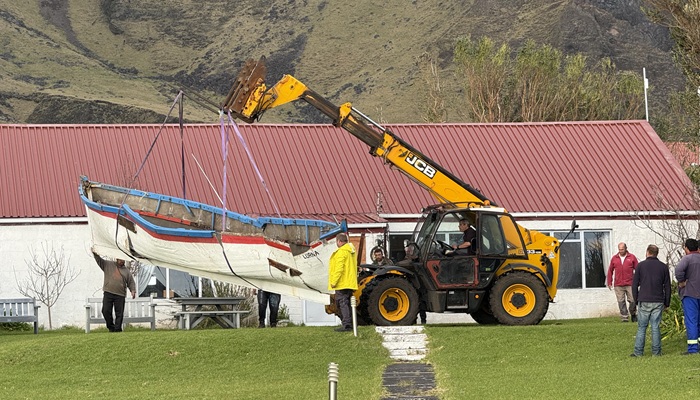
The storm-wrecked longboat Lorna being removed from outside the Residency. Photo: Philip Kendall
We are especially grateful to the Foreign, Commonwealth & Development Office (FCDO) for £250,000, which is enabling us to tackle the most urgent repairs. Roofing, windows, and other immediate needs are being addressed first, ensuring that families and key services can regain a sense of stability. We are also grateful for the donations received through the TdCA's Disaster Fund and through the David Wilson Charity Fund. It’s humbling to see such a generous response.
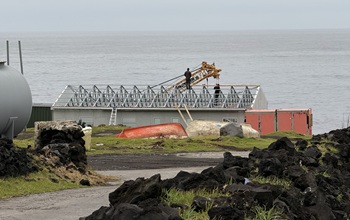
The Biosecurity building now has a new roof, a vital milestone in protecting one of our most important facilities. Work inside continues, with electrical wiring and other repairs still to be completed before the building can fully reopen.
 |
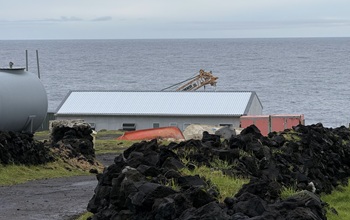 |
| The Biosecurity building gets a new roof - before and after. Photos: Philip Kendall | |
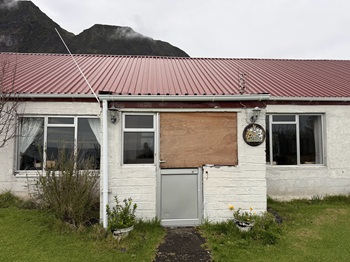
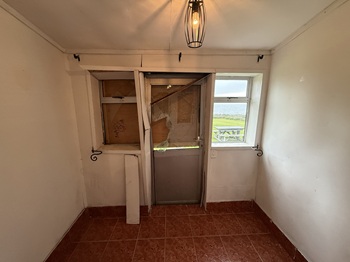
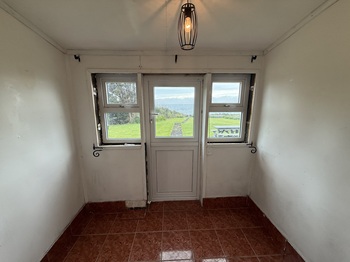
At the Residency, a new front door was fitted last week. This small but significant change has allowed Louise and me to once again welcome friends and neighbours for dinner, restoring a cherished tradition of hospitality. The new windows for the house have also arrived on the island, although they will be installed only after more urgent repairs to other properties are completed.
 |
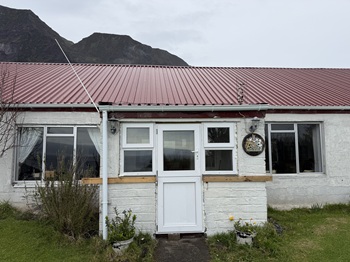 |
| The Residency gets a new front door - before and after. Photos: Philip Kendall | |
 |
 |
Some challenges remain larger. Danny and Lynette’s house that was completely destroyed, along with the Telecommunications Office, will take longer to rebuild. These projects are complex, but our hope is to see both completed before next winter, ensuring that no one is left without shelter and that vital services such as internet, phones and television are not only restored but enhanced.
Through all of this, the kindness of the community and the many supportive messages we have received have been a source of strength. Rebuilding is not just about bricks and mortar; it is about resilience, friendship, and the shared determination to see Tristan thrive again.
Thank you for standing with us as we continue this journey of recovery. Together, we will emerge stronger, with renewed hope for the future.
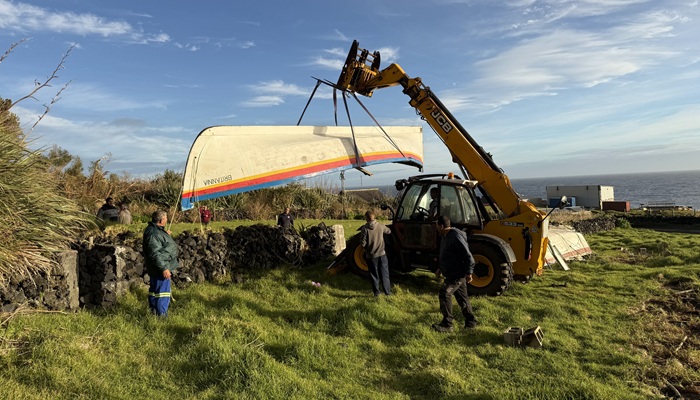
Using the telehandler to lift the windblown longboat Britannia off the Residency garden wall. Photo: Philip Kendall
Tristan Association to help Tristan family after storm damage
Disaster Fund launched
Following a bid from the island, Tristan da Cunha Association (TdCA) trustees have agreed to fund a grant of up to £15,000 to help re-build the home of Danny Swain & Lynette Green which was severely damaged by the 7th July 2026 storm. The couple have two children (aged 8 and 2) and have had to move out until their home is restored.

Photos from Lorraine Repetto show the damaged home
Tristan da Cunha islanders have no house insurance, which is unavailable in such a remote location, and there is only a limited local disaster fund which has also given some support.
The TdCA has existing funds to support this project but has now established a separate Disaster Fund so that potential donors can give to help with this project, or future disasters which unfortunately may occur in the future.

Side view of the damaged roof
The TdCA has a specific Object to provide grants following natural or other disasters, and in 2022 a grant of £10,313.89 was given to Eugene & Kirsty Repetto to help re-build their home which was destroyed by fire.
Anyone can donate by credit or debit card, using the Disaster Fund section of the TdCA Order Form >>

A view from within the house
To find out more about the storm and other damage, please see earlier reports of the July 2026 storm
Stamp issue: Gough Island Meteorological Station Part 1 |
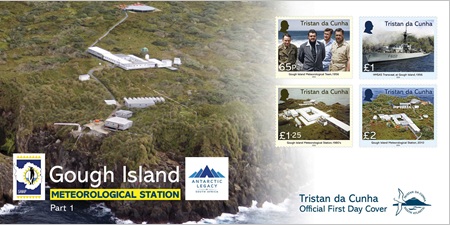 |
| Stamps celebrating the establishment of the Gough Island Meteorological Station, one of the world's most important long-term meteorological stations. 31-Aug-2026 |
|
7th July 2026 Storm Recovery Update Two Weeks On |
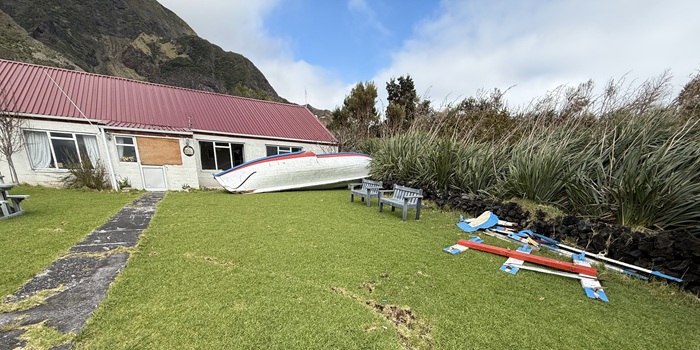 |
| Two weeks after Tristan's hurricane-force storm, things are slowly improving, although there is much left to do. 22-Jul-2026 |
|
Aftermath of the 7th July 2026 Storm |
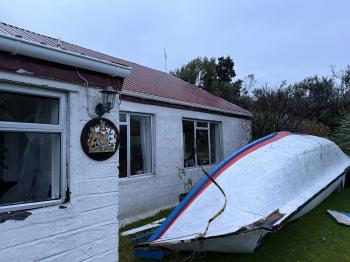 |
| Many buildings were damaged by the storm, but despite some narrow escapes everyone is safe. Initial repairs are underway. 8-Jul-2026 |
|
Damaging Storm hits Tristan, 7th July 2026 |
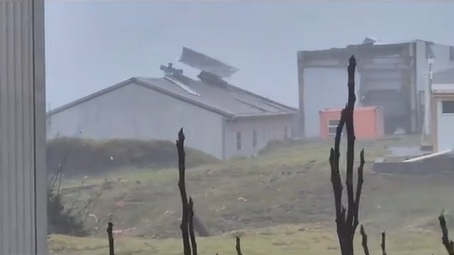 |
| Tristan was hit with damaging hurricane-force winds on the 7th July 2026, expected to continue overnight. 7-Jul-2026 |
|
Snow lying exceptionally low on Tristan cliffs |
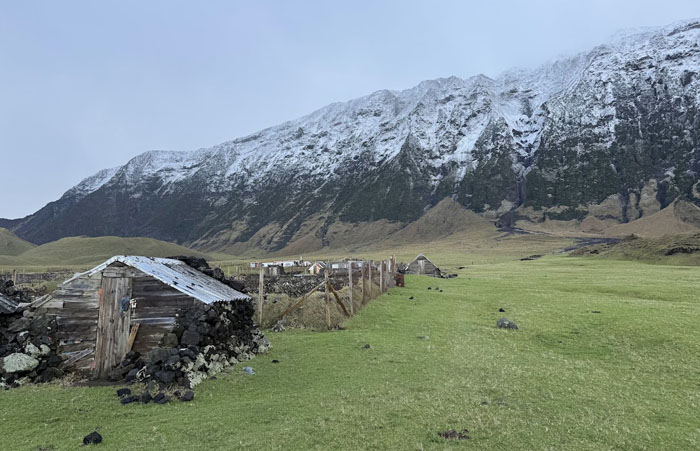 |
| Snowfall visible above village may be the lowest recorded. 3-Sep-2025 |
|
First Update on the February 2024 Flooding |
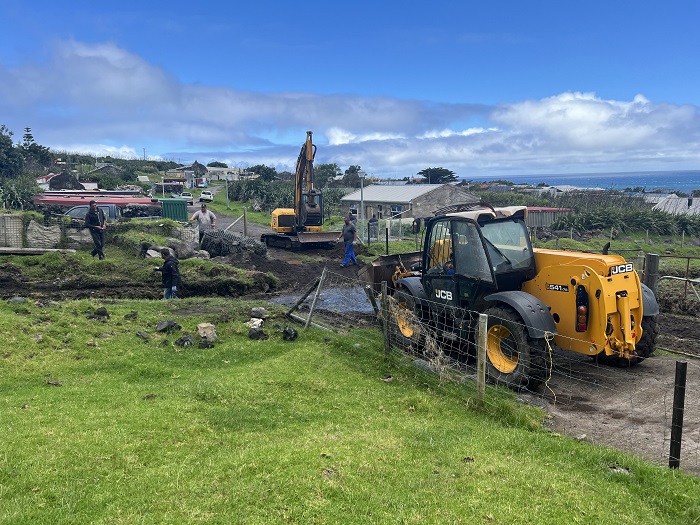 |
| Update the weekend following flooding on the 2nd February 2024. 6-Feb-2024 |
|
- New Flash Floods and Landslides on Tristan (3-Feb-2024) >>
- Stamp issue: 60th Anniversary of Tristan's 1961 Volcano, Part 3 (6-Dec-2023) >>
- Tristan da Cunha Annual Gathering 2023 (7-Jun-2023) >>
- Stamp issue: 60th Anniversary of Tristan's 1961 Volcano, Part 2 (2-Mar-2022) >>
- 'Nothing Can Stop Us' Book Launch (16-Dec-2021) >>
- Stamp issue: 60th Anniversary of Tristan's 1961 Volcano, Part 1 (27-Oct-2021) >>